Welcome To Esperanza Elementary Blog

I want to give you a special welcome to our Esperanza Elementary blog as we take our journey to found the school of our dreams. I invite you to visit us often and offer any ideas, thoughts, suggestions, questions, comments, etc. you might have.

Friday, September 7, 2012

Last Year's Ideas

More wisdom from Kevin Eikenberry--one of my favorite on-line leadership mentors. 


Last Year’s Ideas
by Kevin Eikenberry on August 24, 2012
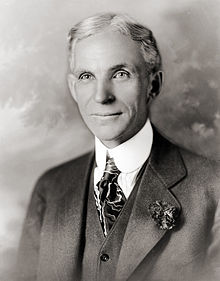
Henry Ford quotationI found this quotation in the front of a book I began reading this week – Wheels for the World by Douglas Brinkley. The book is about the history of the Ford Motor Company, and on the page opening the book there are three quotations, one from Henry Ford himself.
I have shared this quotation with two groups this week, and so it seemed appropriate to share it here as well.
” Businessmen go down with their businesses because they like the old way so well they cannot bring themselves to change. One sees them all about – men who do not know that yesterday is past, and who woke up this morning with their last year’s ideas.”
- Henry Ford, Industrialist

Questions to Ponder

- How do you feel about change?
- How wed are you to your past ideas?
- How often do you generate new ideas for your projects and activities?

Action Steps

1. Look at your business, projects or activities with a blank sheet of paper.
2. Consider what the current and future situations look like.
3. Then determine what the best course of action would be – starting from the blank sheet of paper, not with everything that currently exists.
4. Use those insights to determine what new ideas must be implemented.

My Thoughts

This quotation struck me when I first read it, and it had a similar impact when I read it to groups. It seems to me that, while we can all fall into this trap (women too, though that wasn’t how Ford framed it in his day), the trap might be most dangerous when things are going well.
It is easy to be a believer in your current ideas when you are having success.
It is easy to lose sight of the need to change when profits are high.
It is easy to get complacent.
And when we do, in our minds, new ideas aren’t needed – let alone welcomed.
If things are going well for you now, or even if they aren’t, think about this question – Did I wake with last year’s ideas or am I looking to the future for new ones?

Unleashing Your Remarkable Potential

Thursday, September 6, 2012

Celebrate Uniqueness

The lyrics to this song are a reminder that we don't want all our Esperanza scholars coming out the same.  We want to celebrate each child's uniqueness. 


Little Boxes
Notes: words and music by Malvina Reynolds; copyright 1962 Schroder Music Company, renewed 1990. Malvina and her husband were on their way from where they lived in Berkeley, through San Francisco and down the peninsula to La Honda where she was to sing at a meeting of the Friends’ Committee on Legislation (not the PTA, as Pete Seeger says in the documentary about Malvina, “Love It Like a Fool”). As she drove through Daly City, she said “Bud, take the wheel. I feel a song coming on.”


Little boxes on the hillside,
Little boxes made of ticky tacky,1
Little boxes on the hillside,
Little boxes all the same.
There's a green one and a pink one
And a blue one and a yellow one,
And they're all made out of ticky tacky
And they all look just the same.

And the people in the houses
All went to the university,
Where they were put in boxes
And they came out all the same,
And there's doctors and lawyers,
And business executives,
And they're all made out of ticky tacky
And they all look just the same.

And they all play on the golf course
And drink their martinis dry,
And they all have pretty children
And the children go to school,
And the children go to summer camp
And then to the university,
Where they are put in boxes
And they come out all the same.

And the boys go into business
And marry and raise a family
In boxes made of ticky tacky
And they all look just the same.
There's a green one and a pink one
And a blue one and a yellow one,
And they're all made out of ticky tacky
And they all look just the same.


Wednesday, September 5, 2012

Monday, September 3, 2012

A Teacher Affects All Eternity

Lloyd Newell's commentary on Music and the Spoken Word


A Teacher Affects All Eternity


Hace poco, conforme llegaba la gente a una funeraria para presentar sus últimos respetos a una difunta, la fila crecía y crecía. De hecho, creció tanto que salía por la puerta hasta la calle. ¿Quién era esa tan amada por tanta gente? No era alguien muy importante, por lo menos de acuerdo con el criterio común; no era rica ni famosa; no era una celebridad ni una poderosa líder política ni empresarial. Era una maestra, conocida y amada por su influencia en incontables niños.


¿Nos sorprende que una maestra de un pueblo pequeño recibiera tal expresión de amor y respeto? A esos niños y a sus padres no les sorprendió. Los buenos maestros tienen un gran impacto, pueden influir en corazones y cambiar vidas como nadie más puede hacerlo.


Cuando el legendario entrenador del baloncesto universitario de los Estados Unidos, John Wooden, habló de su último partido, dijo que era "el último partido que había enseñado”. Explicó que el entrenador es ante todo un maestro. Sentía que su responsabilidad no sólo era mejorar la técnica de sus jugadores sino también ayudarles a ser mejores personas. Y así lo hizo. Miles de jugadores y fanáticos siguen beneficiándose de la influencia del entrenador Wooden, la cual miden más bien por los valores que enseñó que por los partidos que ganó.1


Lo mismo puede decirse de todos nosotros. Todos podemos enseñar. Los padres y la familia son los maestros más importantes. Los vecinos y amigos pueden ser maestros; los gerentes, líderes y colegas también, extendiendo el legado de la buena enseñanza infinitamente hacia el futuro. Hace más de un siglo, el renombrado historiador Henry Adams comentó algo que sigue siendo verdad: "Un maestro tiene una influencia eterna; la cual nunca sabe dónde termina”.2
 
1. See Michael Josephson, "Parents Are Teachers First,” What Will Matter, May 23, 2012, http://whatwillmatter.com/2012/05/commentary-776-4-parents-are-teachers-first. 2. The Education of Henry Adams (1918), 300.


Program #4328
 

Sunday, September 2, 2012

Getting to Know You

I listened this morning to the BYU Devotional that Pres. Thomas S. Monson gave on September 15, 2009.  He spoke about a number of prophets of the LDS church and lessons we could learn from each one. 

As Pres. Monson spoke I had an idea.  I felt it would be fun to have outside each teacher's door a picture of the teacher in a frame with the following information about the teacher:
  • Favorite book
  • Favorite food
  • Favorite song
  • Favorite quote
  • Guiding life principle
It might also be fun to have a book kept in the library with stories about each teacher.

Saturday, September 1, 2012

Success and Failure

The fastest way to succeed is to double your failure rate."
--Thomas J. Watson,
American businessman