Welcome To Esperanza Elementary Blog

I want to give you a special welcome to our Esperanza Elementary blog as we take our journey to found the school of our dreams. I invite you to visit us often and offer any ideas, thoughts, suggestions, questions, comments, etc. you might have.

Showing posts with label Kevin Eikenberry. Show all posts

Thursday, March 7, 2013

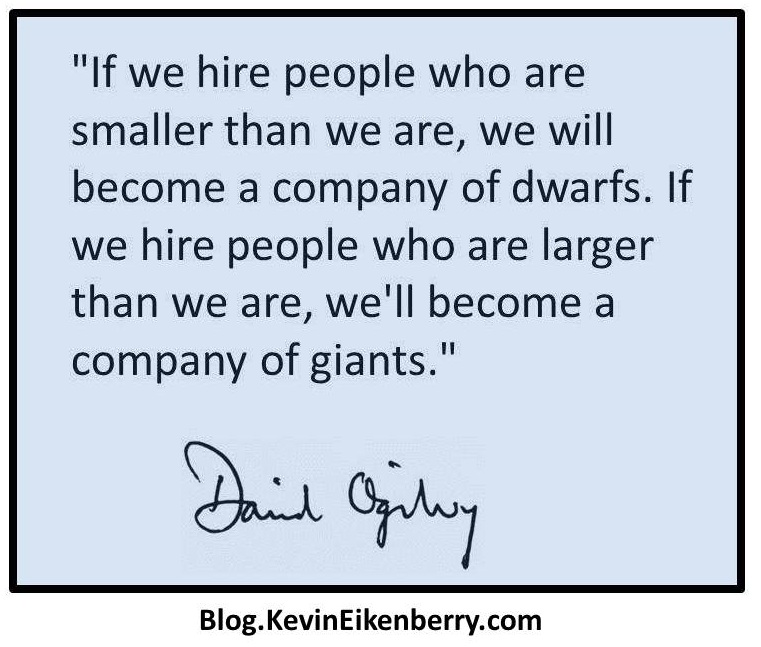
Hire "Giants"

David Ogilivy quotation

This came from Kevin Eikenberry's BLOG. 

Who do I want to hire?
- Who do I hire?
- What is keeping you from hiring giants?

Actions to Consider

1. Determine a wishlist of your perfect employee.
2. Search for that person.
3. Hire them.
4. Help them soar.

My Thoughts

No one will disagree with this idea publicly. Yet many, in that quiet place when they are alone, know that they don’t want to, and won’t hire people better than they are. Why? The list of reasons is long, but mostly they come down to self image, confidence, and having a personal issue overshadow the organizational goal.
If you agree with this quotation privately, I applaud you.
If you act based on that belief, you will build something outstanding – whether it is a neighborhood watch, a group in your church, as a middle manager, or as the owner of a business. Make it your goal to create a “company of giants.” Your team members will benefit, your Customers will benefit, and so will you. Let go of your self for a minute, and watch the results flow to you – faster than you ever believed possible.

Tuesday, January 1, 2013

Get Results

Wise advice from Kevin Eikenberry for a New Year's Day posting.  :)


It happens at this time of the year, every year. As the New Year arrives, people talk about making resolutions. In fact, the ritual of making promises or resolutions at the start of the New Year goes back as far as the Babylonians, and can be found in nearly every part of the world, in many religions.
Apparently there is something about the New Year that gets us thinking about improvement, growth, happiness and contentment.
And that is a good thing.
But there are problems too.
The Top Ten Resolutions
According to the University of Scranton Journal of Clinical Psychology, December 13, 2012 edition, the top ten resolutions for 2012 were:
  1. Lose Weight
  2. Get Organized
  3. Spend Less, Save More
  4. Enjoy Life to the Fullest
  5. Stay Fit and Healthy
  6. Learn Something Exciting
  7. Quit Smoking
  8. Help Others in Their Dreams
  9. Fall in Love
  10. Spend More Time with Family
All of these are valuable, meaningful sentiments, yet most are only sentiments. And because of that, it is no surprise that the same research found that only 8% of people are successful in “achieving their resolution.”
So 45% of people set resolutions, 17% often do, and 38% never set them. The rest of this article is for everyone – whether you set them or not. Because the process I’m going to outline isn’t about resolutions, it is about results.
The List of Resolutions
Let’s look back at that top ten list again and notice that only one of them is even close to a goal (Quit Smoking) – and even it is incomplete. They are changes in habit, they are wishes, and valuable sentiments – but not goals.
We all know that changing habit is hard stuff – if it weren’t, I wouldn’t be writing these words and you wouldn’t be reading them. Remember that you keep a resolution, and you achieve a goal.
The biggest problem with resolutions is that people want a result, but never clearly identify what the result is.
Moving To Results
If you want to achieve something, you must set a target – we must move from resolution to goal – that step will improve your success rate significantly. While much has been written about goal setting, and you likely already “know” something about it, if you are like most people, you don’t apply that knowledge. I’ll share a few keys in a minute, but first, let’s turn that top ten list of resolutions into goals.
The Top Ten Resolutions, Revisited
I’ve taken some license here and made some assumptions. Your actual goals in these areas would be different. What I am trying to do is draw the distinction between a resolution and a goal.
  1. On February 15th, I weigh XXX pounds.
  2. My desk is clean each Friday when I leave work. (You have to know what “clean” means to you, and of course you may mean something different in terms of organizing)
  3. I save $XXX/month –or- on December 31, my savings account contains $XXXX.
  4. I schedule and spend 4 hours each week on an activity I am passionate about.
  5. I exercise 4 times per week, for at least 30 minutes.
  6. On May 1, I have read 3 books (or taken one class, etc.) on exciting topic X.
  7. On March 1, I am completely smoke free.
  8. I do one thing each week to help other people reach their dreams/goals.
  9. On September 15, I feel the warm embrace of the one I love.
  10. We spend one evening each week together as a family, with no TV.
Notice that all of these now have a regular target (a process or activity goal), or have a desired end-state (a destination goal). Both are important and useful. It isn’t hard to see how they have a better chance of success than a resolution.
Tips for the Transformation
As promised here are a few ideas to help you set goals, rather than make resolutions. Buy a book on goal setting or Google it, for much more.
Have a target. What do you want to achieve and by when? The target and timeline make it a goal. Without these things it also isn’t measurable (like most resolutions).
State them in present tense. Notice how all the goals above are written as if they have already occurred. Without going into the reasons why this works, just trust me – writing them this way is much more powerful and effective.
Review them regularly. Setting a resolution often happens late on New Year’s Eve or before the Bowl Games on New Year’s Day – hardly a time of perfect focus. Set your goals and write them down. Then review them at least once a day. Whether you put them on your pc, in your wallet or on your bathroom mirror, remind your conscious and subconscious mind of your goals often.
Have a big why. Perhaps more important than any mechanics is to have a big reason why you want to achieve the goal. Why does the achievement matter? What is the purpose? When that purpose is clear (and you remind yourself of it each time you review the goal), the chances of achievement will skyrocket.
Hopefully this helps you look at resolutions differently – and helps you move further and faster towards what you really want – which is new and better results.
Monday, November 5, 2012

Deviation


I read a quote this morning that supports this article by Kevin Eikenberry:  Only dead fish swim with the stream (Anonymous). 

Vote for Deviation
by Kevin Eikenberry on November 2, 2012
 
 
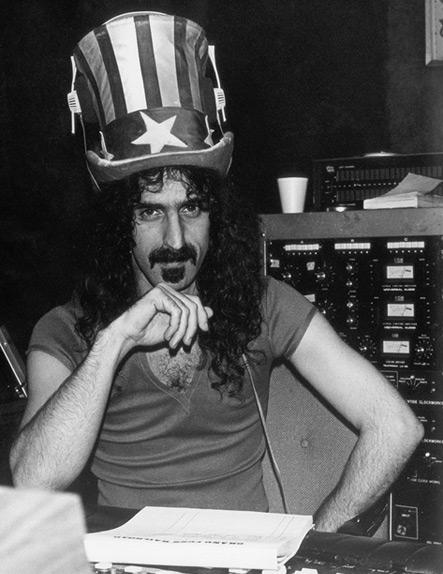
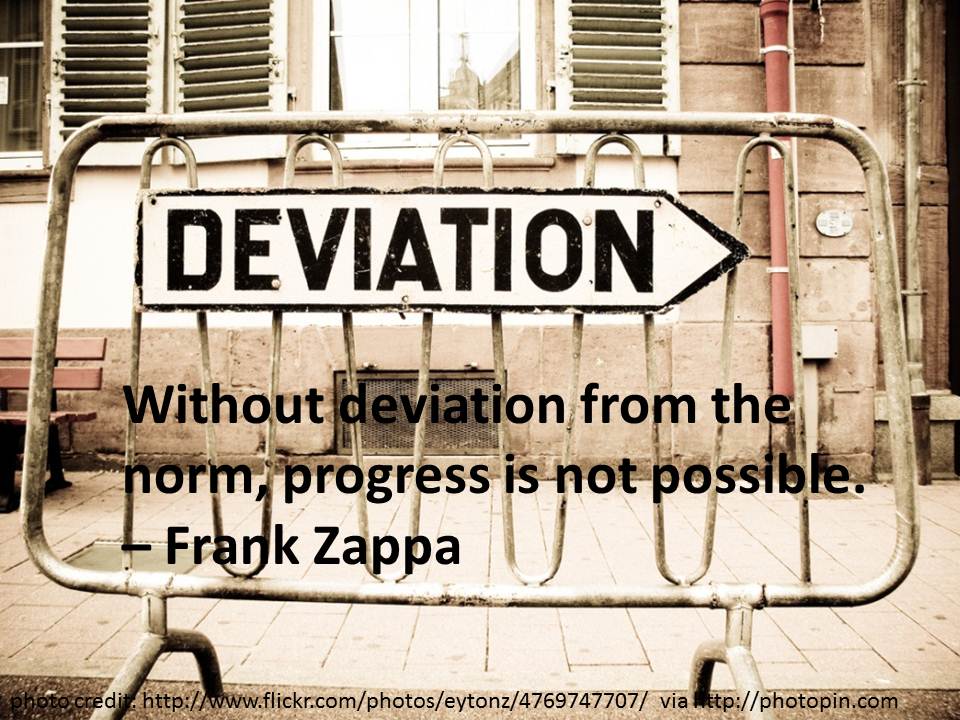
Frank Zappa deviation quotation
I love thinking (and quotations) that come from unexpected sources. Sometimes the power of the idea seems stronger or more profound when we know the source.
Frank Zappa certainly meets this criteria. Zappa was a free thinker, talented musician and much more (I encourage you to read a bit of his Wikipedia entry if you don’t know much about this complex rock star).
Add to the mix that today’s quotation takes a word most people probably have negative thoughts attached to and puts it in a new light. All those elements lead to a very useful and intriguing thought (and I hope, post).
“Without deviation from the norm, progress is not possible.”
Frank Zappa, singer-songwriter
Questions to Ponder
- When was the last time I looked at deviation as a good thing?
- How can I put the word deviation in a better light in my life?
- What progress am I missing by dismissing things “different from the norm”?
Action Steps
1. Look for the abnormal and unusual today.
2. Look at mistakes, not just as something to be fixed, but something to be learned from.
3. Look for ways to promote deviation from the norm, as a strategy for innovation.
quotation from Frank Zappa

My Thoughts
In the workplace, deviation often refers to the statistical idea of a result different from what is intended. Starting with the work of Joseph Juran and W. Edwards Deming, organizations have tried to manage and reduce variation to produce higher quality outputs. All of this is the precursor to the Lean and Six Sigma processes widely used today. In these worlds deviation is to be reduced and eliminated.
Look at the dictionary definitions of this word and you will find many of them skewing to negative ideas (the word “abnormal” is used – rarely considered a good thing). And I’m sure the idea of a social deviant or deviant behavior comes to your mind when you think about this word.
And yet, Zappa is right.
If nothing ever changes, nothing will change – and no progress will even been seen as possible.
Are you stifling the out of the box thoughts? Is your team hiding the deviations (read mistakes) in their work processes? Now that you have read these thoughts, I challenge you to read the quotation again, ask yourself the questions and take the action described above.

Monday, September 24, 2012

Expectations

Once again Kevin Eikenberry provides some great wisdom. 


What Do You Expect? Four Areas of Expectations Required for Great Results

by Kevin Eikenberry on September 17, 2012

What do you expect?Poor performance, turnover, conflict and disengagement. This reads like a checklist of most leaders’ worst fears. I know, because they get mentioned to me nearly every day when I talk with, coach, consult with and train leaders.


While there is no single silver bullet answer to solve all four of these problems, there is one major component common to all. Dissect issues of poor performance, look at the causes of employee turnover, find the root of most workplace conflicts and disengagement and you will find unclear or mismatched expectations.
But don’t just nod your head and agree with me philosophically; think about one of the challenges you face today as a leader – I’d be willing to wager unclear expectations is playing at least some role in the situation. Keep thinking about your situation and consider the four areas of expectations that follow. For optimum performance and strong relationships, make sure expectations are crystal clear in all four of these areas…
The work itself. People need to know exactly what is expected of them for the work itself. What levels of work quality are required? What defines successful completion of work? What are the boundaries on responsibilities? What are and what aren’t the roles of the job? This all includes, but goes beyond, the job description. For optimum performance and strong working relationships, these must all be clearly understood and mutually agreed to.
Most people might think this is enough. And to be honest, there are often big gaps here, and if you close these gaps things will improve dramatically. But there are three more areas of expectations worth clarifying and codifying.
The communication. How do we communicate? About what? When? How often? Using what medium? Communication is a critical component of organizational life and is far too important to leave to chance. Without clear expectations here, people operate based on their preferences and their habits, which might not meet the needs of others in the organization. More workplace conflicts probably start here than any other place. If you want to improve the communication in your organization, spend some time clarifying what is expected in your communication.
The time. Time gets in our way a lot too. What does “I need it Friday” mean? Does it mean it is on my desk at the start of my day or is the close of business fine? Does it matter when people work or how they work? Do people know what the expected response times are for inquiries from Customers, co-workers and leadership? If not, people may swing far from what you assume to be obvious. Without clarity here, people could either be on their email device 24/7 striving for immediate response, or at the other extreme assuming a couple of days is fine for that request.
The culture. People don’t work in a vacuum – the workplace itself is an important component of the work itself. When people are hired either fresh from school or from another organization, they bring their past experience and habits with them. If those experiences and habits differ from “the way things are done around here”, there will be mismatched expectations. These mismatches can lead to a perception that people aren’t a good fit, can be the initial source of poor performance (perceived or reality) and the root of interpersonal conflicts. Make sure that the organizational norms and overall expectations are explained. Help people see that understanding and matching their behavior with cultural expectations, while more subtle than some other factors, is incredibly important to their success.
Human beings operate and perform based on their view of the world. In the absence of clear expectations, they create their own worldview. The nasty words we use for that are – we assume. To create great performance, improve employee satisfaction and engagement and reduce the incidences of workplace conflict, spend more time on setting clear expectations.
When you do that everyone knows the answer to “what do you expect?” and more success will follow.

Friday, September 21, 2012

Teams

Felt Kevin Eikenberry had some great insights about teams. 

To Team or Not to Team?

by Kevin Eikenberry on September 19, 2012

Everyone thinks teams are a good thing. Leaders like to form teams. People, for the most part, believe in the value and purpose of teams . . .
“All of us are smarter than each of us.” and “1 + 1 = 3” are just two common phrases that reinforce and prove how pervasive our belief in teams is.
And that belief is justified.
Sometimes.
The fact is sometimes we would be better off without a team – with individuals contributing as individuals.
What?
No team?
At least not the type of team you probably think of, when you think of a team.
Two Basic Types of Teams
To keep things simple, I believe there are two basic types of teams. There are basketball teams and there are track and field teams.
Basketball Teams
Basketball teams (or soccer or hockey) are teams that require, by the nature of their task, that everyone play as one unit. On teams in these sports, the players are interdependent. At any moment of any game, in order to be successful, the entire team needs to be working in harmony. The role of each player is designated by their position (which takes into account their innate strengths and acquired skills). However, at any moment during the flow of the game, the situation may require any player to take any role.
And on good teams of this sort, all players are willing to be flexible, to assist, to change roles, to “do what it takes.” Because they know that without working together, they can’t achieve their team goals of victory – the nature of the game forces interdependency among the team members.
Track and Field Teams
Players on track and field teams, on the other hand (except in a few relay events), are not interdependent, they are independent. Shot putters have a skill set that is largely unrelated to the sprinters. And the high jumpers can be personally skilled and successful without any tangible help or support from the distance runners.
At the end of the day (or meet), if enough individuals win, the team will win. The most successful of these teams will have highly talented individual contributors, supporting each other to reach their common goal of winning. In this way, they are definitely a team. They may feel allegiance to the group. They certainly can have pride in being a part of the group. They want each other to be successful. They know that they can all be more successful when each individual is more successful. They can have a common goal (to win the meet or championship). But the fundamental relationship between the players isn’t the same as it is on a basketball team.
What This Means to Us
In our organizations, we most likely have both sorts of teams. We have teams that work in a process flow or project where the outputs of one person directly affect the work of the next – where the work and the people are highly interdependent.
We also have teams that look more like the track and field team. In these situations people are working toward a common mission and goal, but their work doesn’t intersect in nearly the same ways as for the highly interdependent teams.
The challenge comes because, in my experience, we tend to want all teams to think they are basketball teams. If the work or project dictates that focus, great. But if you have a track and field (independent) team, you don’t need the same focus on interdependence and traditional “team building” activities.
What Do We Do Now?
If you lead a team or form teams, you need to think about and talk about this distinction. Determine what type of team you have (or need) and gain agreement with others. This will allow for appropriate and effective expectations to be set as well as appropriate plans for training, development and team building.
Knowing which type of team your work or project dictates is the first step towards helping that group of people be more successful and the work being done successfully.
So maybe it isn’t really, “To team or not to team?”, but “Which type of team?” that is the question.
Answer that one first. And, using the answer as a guide, you will be helping all of your teams (and the individuals on them) be more successful.

Wednesday, August 15, 2012

Ten Phrases Every Leader Should Use

“I made a mistake.”I'm sorry.
“I was wrong.”
“I’m sorry.”
“I’m not sure.”
“I don’t know.”
“Would you help me?”
“Could you help me understand? I’m not sure I get it.”
“What do you think?”
“What do you suggest?”
“What would you do?”

This great counsel came from my valued mentor, Kevin Eikenberry. 

Thursday, June 7, 2012

Ask, Seek, Knock = ASK

From Kevin Eikenberry on June 6, 2012:

Matthew 7:7 reads: ”Ask and it will be given to you; seek and you will find; knock and the door will be opened to you.”(NIV)
I was always fascinated by this line for a variety of reasons, including the fact that seeking and knocking start with the curiosity of asking - and when taking the first letters of the three pieces of advice: ask, seek, knock – you get ask.
So what are you asking for?
Let me give you a short list of things to consider asking for.
Ask for information.
Ask for ideas.
Ask for an opportunity.
Ask for the sale.
Ask for help.
Ask if people need help.
Ask for forgiveness.
Ask for clarification.
Ask for what you want.
Ask for feedback.
Asking can be an act of daring, but think about how any/all of these questions can make you a more effective human being and leader.
Questions help us learn.
Questions engage others.
Questions make us more real and authentic.
Asking is powerful.
What are you asking for today?

Wednesday, May 16, 2012

How to Hire Rock Stars

Kevin Eikenberry's BLOG post on 5-16-12:

If you want to hire rock stars, you can’t wait until you have an opening to start thinking about hiring. Here’s an exercise to do today to help you implement this idea.
Create a crystal clear, three-dimensional description of your perfect candidate for a given job.
  • Develop clear expectations of the perfect employee in that role.
  • Identify the skills needed to start (must haves) and the skills that need to be developed.
  • Describe the behaviors you want to see in this individual.
  • Make all the intangibles, tangible.
When you build this crystal clear picture, a picture so clear that it is obvious when you see the person – it makes the interviewing and selection process easier. But that isn’t the most important reason to do it.
The most powerful reason to do this is so that you can begin to attract your perfect employee before you need them.
Let’s face it, clarity is attractive. Your clarity will help you bring the right people into your world and that same clarity will help people decide for themselves if they are your person, or not.
If you need to hire today, take some time to do this exercise. But if you don’t need anyone today, invest in the exercise for the future.
Think better bait on the hook, not seeing what will be in the fishing net.
Think attraction, not advertising.
Because the time to think about hiring is long before you need someone.

Monday, April 23, 2012

Getting the Most from a Training

Kevin Eikenberry shared this.  It is great counsel for us to use for each of our Esperanza trainings.


Before You Attend . . .

 1. Review the workshop materials. If the trainer has sent you materials, read them. Perhaps it is an outline of the learning objectives or agenda. Looking that over will give you a sense of what is to come and get your mind thinking about how these ideas might benefit you. If pre-reading is offered, reading it will prepare you further. The more prepared your mind is for the subject matter, the more connections you will make during the session, the more you will gain, and honestly, the easier it will be.

 2. Think about what you would like to learn. This is the most important thing you can do before the workshop begins. Think about (and write down) what you would like to learn from the session. Then take your answers to the training with you, reviewing them before the workshop begins (the trainer may ask for some info like this, and if they do, you are already prepared – no last minute pressure!) Ask yourself questions like:

 What would make this worth my time?

 What is my fondest wish for this training?

 What do I expect from this training?

 What is the best possible outcome that could arise from this training?

 What is the biggest question Id like answered?

 3. Check your attitude. Decide to bring an attitude that will help you learn. Be open-minded. Be positive (or at least not negative). Bring a smile. Think about it: how often have you learned successfully when you were stressed, cynical or negative? Remember that you chose your attitude. Decide now to bring one that will be beneficial, not a barrier to your learning.


While You are There . . .

 1. Take responsibility for your learning. Yes, there will be a trainer. Yes, they will be “in charge” of the workshop. But you are responsible for your learning, so do what you need to be successful. This could be anything from bringing a sweater if you might get cold, to bringing coffee if you need it, to asking the questions you want answers for. The session is for your learning. Make sure you get what you want and came for, and remove as many barriers from getting that as you can. Ultimately, you are responsible for your learning – so take that responsibility.

 2. Look for application. The most important question you can ask yourself during any training is . . . “How can I use this?” Throughout the session, keep your mind open and your radar out for how you can apply what you are learning. Realize, too, that because you are away from your normal routine, you may get ideas that aren’t even directly related to the training – just consider those a bonus. Look for application, and write those ideas down so you don’t lose them!


3. Engage in the process. Learning is an active process, so be an active participant. That doesn’t mean you have to answer every question or be the most talkative person in the group – it just means to actively engage in what is going on.


After You Leave . . .

 1. Decide what you will do next. You may have time to do this before you leave the session. If so, great. If you don’t know that, this is one of the most important of these nine suggestions. Identify the top 1-3 things that you learned and what to apply in your work. Write them down, along with any quick thoughts on your plan of action. Writing these down provides clarity and focus. It also helps your commitment to success.

 2. Teach something to someone else. Take something that was useful or interesting to you and teach it to someone else. When you do that you begin to own the learning for yourself and you understand it better. Plus, you are benefiting someone else – and in teaching them, they might be able to hold you accountable for applying that lesson in your work too!

 3. Take action. You prepared for the session. You activity participated. You even decided what you would like to do. None of that matters unless you actually do something. If you want to get more from the time you have invested in going to training, make sure you try something you learned – until you do that, there is no real return on your investment.


Nine steps – each are easy to do. Collectively they will make the next training you attend more enjoyable and valuable.


Will you do them?


Signed,


A person who believes in you and your success

Friday, March 9, 2012

Continue to Measure Anew

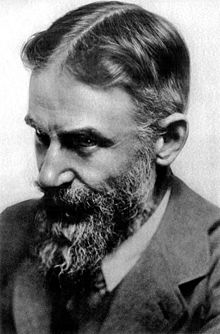
George Bernard ShawThanks to Kevin Eikenberry for sharing these valuable insights!

Today, a metaphorical quotation packing a powerful punch.
“The only man who behaves sensibly is my tailor; he takes my measure anew each time he sees me, while all the rest go on with their old measurements and expect them to fit me.”
George Bernard Shaw, Irish playwright, Nobel laureate

Questions to Ponder

  • What old beliefs about yourself are you holding onto?
  • What old beliefs about others are you holding onto?
  • How could you take a fresh perspective, or measure anew, today?

Action Steps

  1. Look at the people with whom you interact today with fresh eyes.
  2. Look beyond your past interactions, and create a new first impression.
  3. Then, compare the old measurement with the new one, and see what you learn.

My Thoughts

I don’t know about you, but clothes that once fit me well, don’t anymore. If I bought new ones based on my old size, it wouldn’t be a pretty picture. I’d like to think that I have grown in ways other than pounds though . . . that I am a different person with different experiences, perspectives, knowledge, and wisdom than I once was. Given that, I’d prefer people look at me for who I am today, not simply who I once was. . .
Wouldn’t you want the same?
So why don’t we give others that same chance?
Read Shaw’s words again, and think about the situations and people who you have measured and since thrown away the ruler.
Maybe it is time to get a fresh perspective. Measure where people are today, and where that measurement can take them, rather than relying on past memories, or worse, other people’s measurements of people you adopted as your own.
Measure carefully.
Measure today.

Monday, August 22, 2011

Set the Example

Once again Kevin Eikenberry has provided some valuable insights for our Esperanza leaders and educators.

To lead someone or something means, literally, to be in front, so that others can see and follow in that direction. Stated another way, if you think you are leading, but no one is following, you are just taking a walk. The following are 7 ways to set an example for others to follow.

Attitude
As a leader, they are looking to you, watching for clues and modeling your attitude. . If you don’t do it, who else will?

Learning
Every leader wants those they lead to be learning, developing and growing. It is hard to convince them to do so if they don’t see you doing it

Expectations
The expectations you have for others will impact their performance, positively or negatively. Which way will it be? Are you going first by raising your expectation of others so they can build confidence, urgency and discipline to reach those expectations? It won’t happen automatically. Set your expectations of others, let people know you believe in them, then watch them grow!

Change
If you want to affect and implement change you must be a champion of it. Are you open to trying new things?

Trust
Offer them trust. Be more trustworthy. Waiting for others to take the lead, could be a long wait. Extend and offer trust first. Occasionally you will get hurt, more often greater trust will build.

Questions
Stop talking and start asking. Ask questions first. Ask questions often. Listening
Certainly, once you ask a question you will be best served by listening to the response. Setting an example means taking the risk, doing what is necessary, doing what no one else is doing. It means going first.

Friday, June 17, 2011

Listening to Influence

I have mentioned Kevin Eikenberry in other postings. He is truly one of my favorite mentors when it comes to leadership. I have spent a considerable amount of time reading about the power of influence and how to influence others to accomplish our Esperanza goals. Therefore, when a recent article from Kevin was titled To Listen is to Influence it caught my attention.

Kevin included in his article a Chinese proverb: To listen well is as powerful a means to influence as to talk well, and is as essential to all true conversations. Therefore, it would behoove all of us to think about the strategies we can employ to sharpen our listening skills.

Teachers who listen better to their students and their students' families will gain invaluable insights and thus, be better teachers. Esperanza administrators who listen to students, families, teachers/staff, and community members and respond accordingly will be more effective adminstrators. Esperanza Board members who listen to each other and to the school's administrators will be in a better position to meet the needs of the school to better serve the students.

It is amazing how valued a good listener is--probably because it is such a rare commodity. It is our desire to make being a good listener part of Esperanza's school culture.

Thursday, June 9, 2011

Paradise Is Where I Am

Paradise is where I am. These words of Voltaire that Kevin Eikenberry shared yesterday spoke to me--not only for my personal life but also for Esperanza. I want everyone at Esperanza to feel that way while we are working together in the planning stages as well as once the school opens.

I like what Kevin Eikenberry said: "As leaders we have the responsibility for the environment in which those we lead operate. We can choose to make the working environment one that promotes people, their confidence and their success. We can find glimpses of what paradise looks like for others and help them find it in their work. When we do these things we are creating lower turnover, higher productivity, and greater results..."

These thoughts from Kevin complement perfectly the Dr. William Purkey "Inviting School" theory and principles that we are using as a foundation for Esperanza. Therefore, I am going to plan what I am going to do, starting today, to create an inviting environment so that all of us associated with Esperanza can say, "Paradise is where I am."

Monday, May 16, 2011

Not Everyone Will Like Us

Kevin Eikenberry shared on his blog 5 lessons we could learn from Elvis Presley. One thing that particularly struck me was the one that said embrace those who embrace you. He then went on to explain that being influential doesn't mean everyone has to agree with you, see your vision, or even like you. In fact when trying something new that is bold and different will make some people very uneasy.

Esperanza Elementary in itself is something new and different. Then there are certain aspects of the school that are new and different. In order for us to be successful it is critical that we stay focused on what we want to accomplish and not be swayed because someone happens to be critical of what we are doing.